Creating content brings a sense of freedom. A camera in your hand, an idea in your head, and just like that, your voice comes to life and reaches the world. But at some point, freedom can make room for other emotions: fatigue, pressure, guilt, and fear.
Posting, replying, filming, editing, tracking metrics, negotiating brand deals, and still looking upbeat and spontaneous, even when everything has become an obligation, can be a lot to handle.
This is where the Creator Economy reveals a delicate contradiction: the market that brought autonomy can also push Creators toward exhaustion. After all, content creation is work too, and work needs boundaries, breaks, structure, and support.
What is burnout?
According to the World Health Organization, burnout is an occupational phenomenon resulting from chronic workplace stress that has not been successfully managed. It involves exhaustion, mental distance from one’s job, and reduced professional efficacy, but the WHO does not classify it as a medical condition.
Put simply, burnout syndrome is not just the fatigue you feel after an intense week. It is what happens when that fatigue starts to change your relationship with something that once felt meaningful.
Why does burnout affect Creators?
For anyone who creates content online, work rarely ends when the content goes live. Then come the comments, the metrics, and one constant question: did it perform well enough?
Burnout can arise when content creation starts to revolve around constant pressure with no clear limits. The Creator Economy has brought audiences, brands, and influencers closer together, but it has also merged personal life, identity, business, and performance in one place: the phone screen.
A study by Creators 4 Mental Health and Lupiani Insights & Strategies, reported by the Harvard T.H. Chan School of Public Health, found that Creators report high rates of anxiety, depression, and burnout. The findings put into words something many Creators already know firsthand: creating for the internet becomes overwhelming when everything depends on one person.
When authenticity becomes another source of pressure
There is a common saying online: “be authentic.” The idea is good, but the problem begins when authenticity becomes one more item on the to-do list. Sharing behind-the-scenes glimpses, opening up your life, responding quickly, showing vulnerability, and staying approachable, real, interesting, and consistent can create the false impression that everything has to become content.
For Creators, scaling without losing authenticity means understanding that having a distinctive voice does not require constant exposure. You can build connection without turning every part of your life into a topic, stay close to your audience without being available 24 hours a day, and grow without abandoning your boundaries.
Authenticity should be consistency between what you create, what you believe, and how you sustain your career.
How to grow without turning content creation into exhaustion
Remember that this article is not a substitute for a professional assessment. If the signs persist or affect your routine, seek professional support. Even so, some choices can make content creation more sustainable. Here are a few:
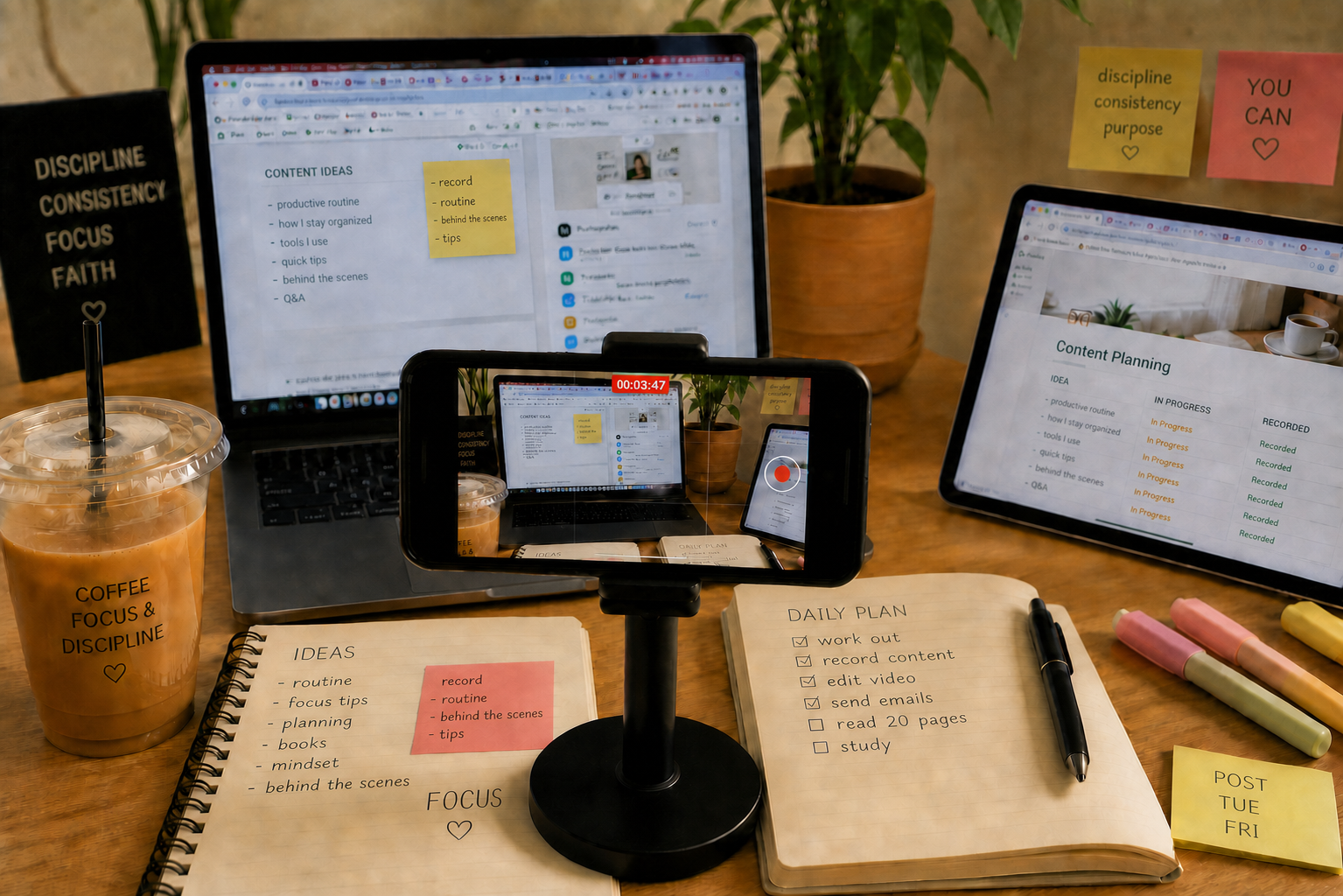
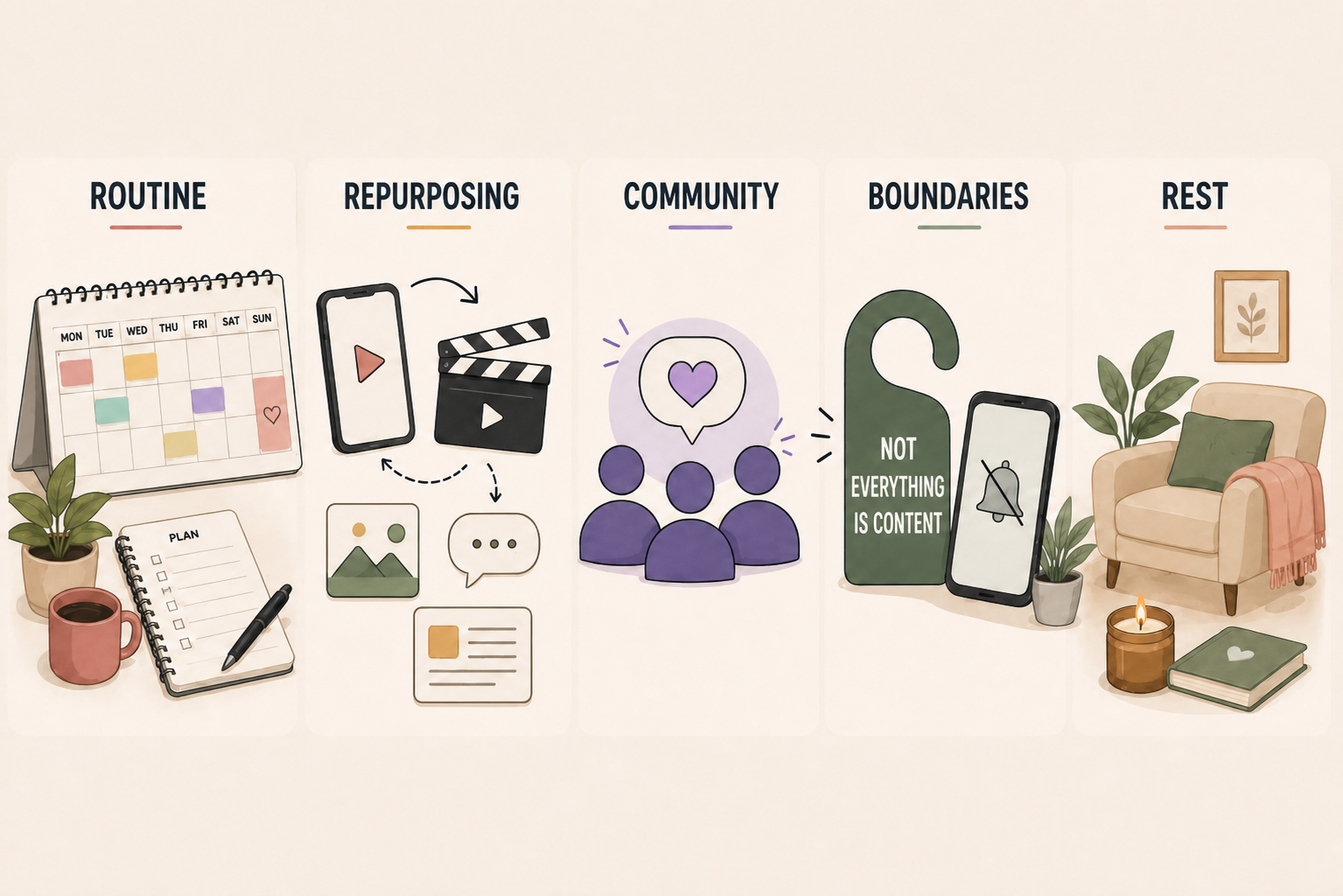
- Organize your production routine around topics, formats, and filming days, while also leaving room for rest.
- Repurpose strong ideas across different formats: short videos, behind-the-scenes content, posts, or conversations with your community.
- Separate metrics from identity: content that performs poorly does not define your talent. If a post flops today, learn from it and move forward.
- Build a community you can trust, not just an audience. An audience consumes, while a community participates, offers honest feedback, and strengthens the relationship.
- Establish clear boundaries: not every moment needs to become content, and not every trend needs a place on your calendar.
A creative career also needs structure
Burnout in the Creator Economy should not be treated solely as an individual problem. It can also signal a work model that demands constant presence, immediate responses, and creativity under pressure.
That is why a Creator’s career cannot rely on creative energy alone. It needs structure to organize content and monetize it more predictably. This is where platforms like Flamus enter the conversation, not as a solution to burnout, but as part of a more sustainable vision for a creative career, one in which you can strengthen ties with your community and monetize exclusive content.