
Organic growth means expanding your audience without paying for ads to distribute your content. That might make frequent posting seem like the secret to success, but it’s not always that simple. Consistency creates opportunities to be discovered, but the number of posts alone doesn’t tell you whether people want to keep following what you share.
So, how often should you post? There’s no posting frequency for organic growth that works for every Creator. To find yours, look at how long production takes and how the people following your profile respond. The most important thing is to start at a pace you can maintain and adjust from there.
What matters beyond quantity
Before choosing a number, look at your routine: a game review takes research and editing, while commentary on the news calls for a quick response. Expecting the same pace from both ignores the work behind each format.
Choose a posting frequency you can manage even during a busy week. For example, if you can produce two thoughtful pieces of content a week, start there. Set aside time to read comments and prepare the next posts. If every week ends in a scramble, rethink your schedule before increasing the volume.
A trend can take off and draw a crowd, only to disappear tomorrow. Besides, constantly chasing the next big thing is exhausting. A creative, original series with a voice of its own, though, brings people to your profile looking for the next post.
Consistency doesn’t mean posting every day
A long game review can give you clips to share on other days. A fashion feature can return every week. And if you cover pop culture, it makes sense to post more around a premiere and slow down afterward. Your posting frequency can follow the kind of content you create. If you announce a weekly series, for example, your audience needs to know what to expect and when to come back. Keep that in mind when setting your schedule.
Your niche, influences and voice matter for organic growth
Think about the topics you keep coming back to and how you talk about them. That combination gives your profile its personality. Over time, it helps people recognize your content before they even check who posted it.
And having a category doesn’t mean always creating the same thing: a food Creator can alternate between recipes, restaurants and culinary trends. The formats change, but a shared perspective ties them together.
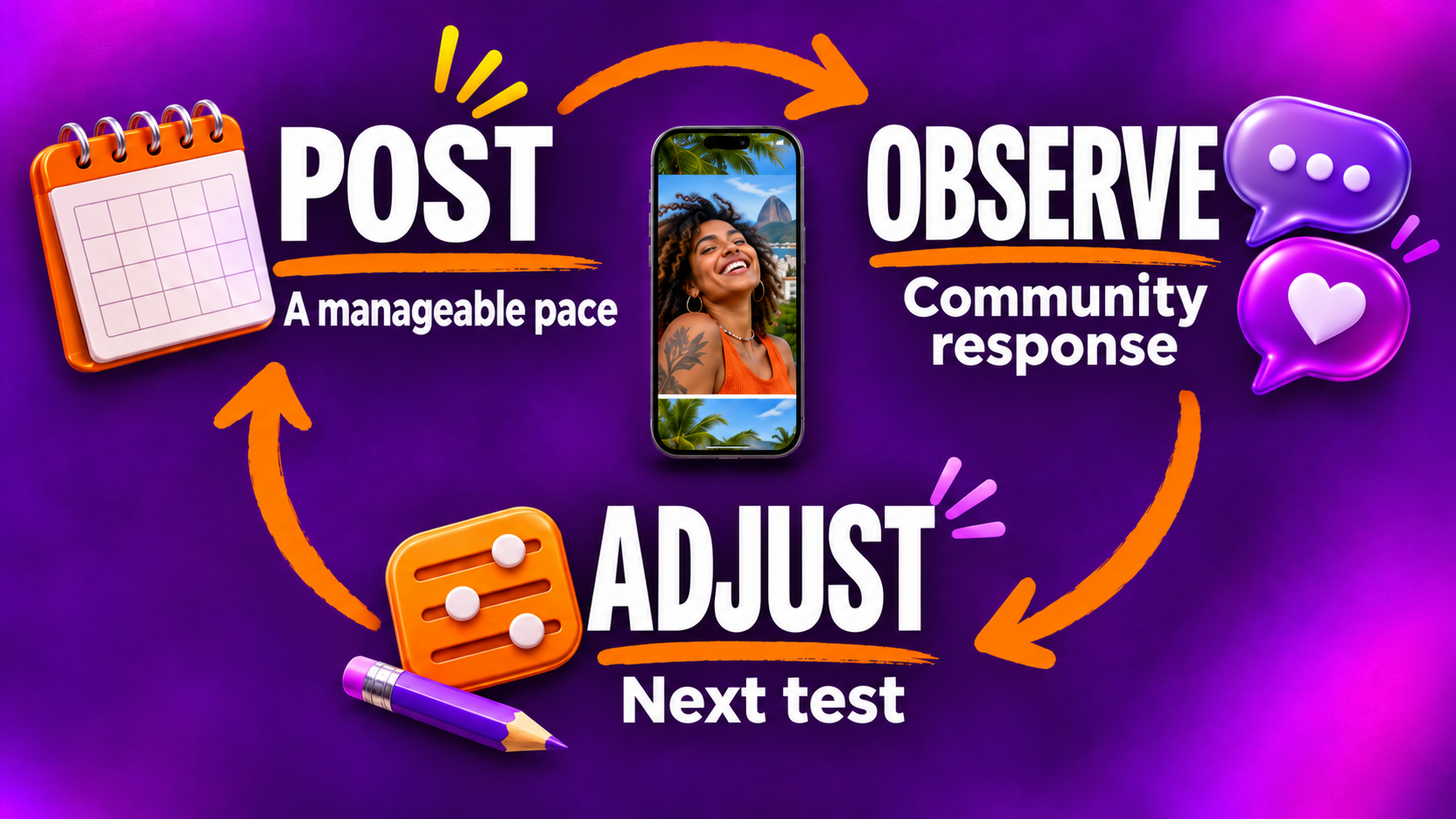
Post, observe, adjust: the organic growth cycle
To work on organic growth, organize your next cycle like this:
- Post: choose a manageable pace and topics that fit your work.
- Observe: see who showed up, how people responded and how long production took.
- Adjust: choose one thing to test in the next cycle, such as format, approach or frequency.
Set aside time in your calendar to review these results before planning the following week.
Organic growth: how to tell if you’re on the right track
One post reaches lots of people, but the conversation ends there. Another reaches fewer people and sparks questions, shares and requests for a part two. To assess organic growth, look at both results alongside what you wanted each post to achieve.
Look at which posts people save, share and comment on. When the platform provides this data, check retention and how many viewers return, too. Compare posts in similar formats and look for patterns in the results.
If someone asks for a topic, see whether it fits what you want to create. Listening to comments helps you choose your next steps. Explore more tips for growing your fanbase.
What should you test before deciding to post more?
For a few weeks, keep your posting frequency steady and test a recurring feature. In a second test, try one topic in two formats. If you change everything at once, it’s hard to know what made a difference. Also note how long you spent researching, producing and editing. If a format attracts interest and fits your routine, it’s worth repeating before deciding that posting more is the answer.
When does it make sense to post more often?
If a premiere calls for you to be more present, pick up the pace during that period. If production requires research and editing, make room for that work. Your next post needs a reason to exist beyond filling an empty day in the calendar.
When your audience starts recognizing your work and joining the conversation, opportunities to monetize your content emerge, too. On Flamus, you can deepen that connection with exclusive content and create a space where your community can stay close, even when your reach fluctuates. Discover Flamus and build a relationship with your audience that doesn’t have to start over every time the algorithm changes.