Your show’s name is saved in your notes. You have fifteen tabs open comparing microphones, cameras and backdrops. But not a single minute recorded. If you’re researching how to start a podcast, getting ready can become a way to put off the launch.
Alexandre Nickel, a podcaster and Creator who recently joined Flamus, suggests making a test recording first and leaving the shopping for later. Based on his advice, we’ve picked out five decisions to help you move from open tabs to your first episode.
1. How to create a podcast you’d want to listen to
To create a podcast that feels like you, start with the subject. Pick something you’ll still want to explore after the initial excitement wears off. And think about who might want to listen.
Nickel suggests picturing your listener, their interests, habits and where they look for content. A film podcast could cover new releases or forgotten horror movies: you don’t need to find a subject no one has ever covered. You can bring your own way of looking at it.
2. How to build a podcast that fits your routine
When you think about how to set up a podcast, it’s easy to start with a shopping list. But getting three friends together every week, for example, is more about schedules than microphones. The format comes first.
Solo, co-hosted or interview podcast?
When you record alone, you choose the topics and the time. You handle the editing too. Bring other people in and you gain company and different perspectives, but you need to find a time that works for everyone and share the airtime. With remote interviews, there’s also the guest’s audio to check.
There’s also the narrative podcast, where research and a script shape the story. If you’re unsure, picture a busy week. Could you still produce the episode?
3. Try recording before investing in equipment
Nickel recommends experimenting for a month or two with what you already have, even your phone. Before blaming the device, try recording away from a noisy window, in a room with less echo, and listen to the result.
Listen with headphones. Does your voice sound far away? Is there an echo? Check whether one person is much louder than the others, too. Better to catch that now, before opening another shopping tab.
4. How to create a podcast with a script that sounds natural
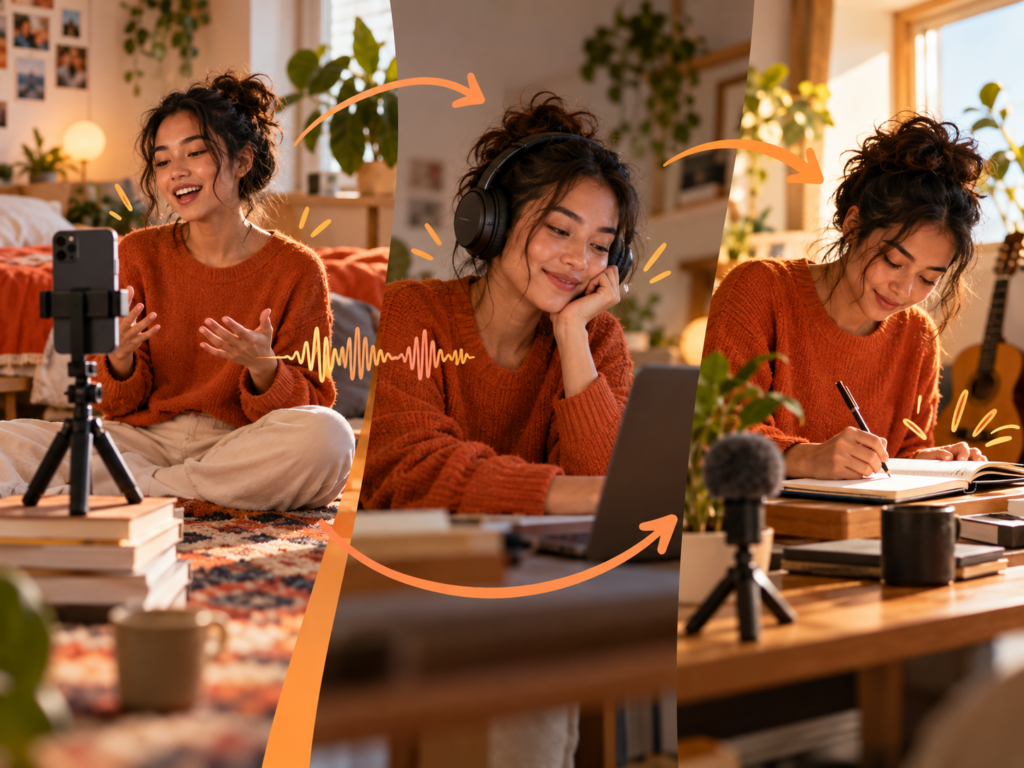
Your script can look great on paper and trip you up when you say it aloud. It happens. After researching and organizing your topics, read it out loud and make a test recording. If a sentence leaves you out of breath or uses a word you’d never say in conversation, change it.
Prepare your interview questions. Just leave room to listen: if your guest starts telling a story worth hearing, the next question can wait.
Record in sections and learn to edit your own audio
If recording alone feels difficult, break the episode into sections. Stumbled over an explanation? Record just that part again. When editing, tidy up repetitions and pauses that make it harder to follow. You don’t have to get everything right the first time.
5. Publishing your first episode is just the beginning
To publish, get your edited episode, title, description and cover art ready. Then use a hosting service to create your feed and distribute the audio to podcast apps. Your episode is now available. Next comes another question: how do you get people to find it?
Friends and family might listen to the first episode out of curiosity. But as Nickel points out, that doesn’t guarantee a loyal audience. The challenge is to give other people reasons to want to hear the next one.
Promote it on the channels your audience follows, choose a schedule that fits your routine and listen to what people have to say. You could release episodes weekly, every other week or in seasons. What matters is being able to keep that commitment.
Your first episode doesn’t have to be your podcast’s final form
Maybe you’ll listen to the test recording and realize the intro went on too long. Or that one section worked well and deserves more time in the next episode. The first recording is useful for that, too. It gives you something real to listen back to so you can spot what feels off and rework it.
Once the show is out, notice who comes back and what they say. Little by little, you’ll get to know who’s listening on the other end. On Flamus, you can bring your listeners together and share exclusive content to keep that exchange going. Check out the platform. But before that, there’s a much smaller step: record your first minute.