
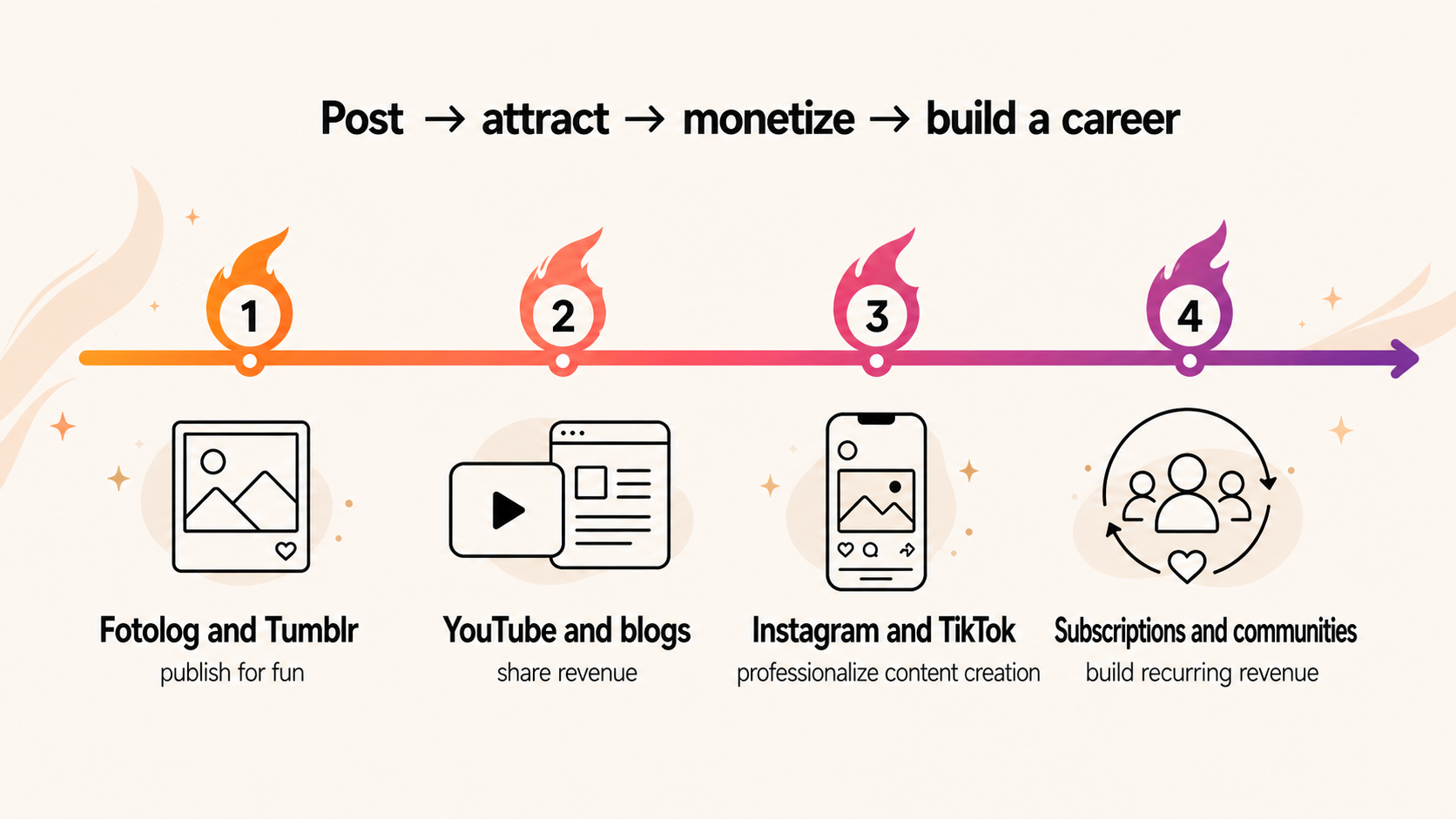
Anyone who remembers platforms like Fotolog and Tumblr entered content creation when the field was still wide open.
At the beginning of the last decade, posting videos and photos online was still, most of the time, a hobby. Many bloggers, YouTubers, and Instagram Creators started simply for pleasure, posting when they felt like it and with no income attached.
With the popularization of smartphones, the expansion of social media, and the arrival of monetization programs, the landscape changed. In 2007, for example, YouTube launched its Partner Program, which began sharing revenue with content Creators.
Today, creating professionally involves planning, organization, and, depending on the stage of your career, even legal formalization. It can become a solid, profitable career, but it is still work: it requires strategy, consistency, and a long-term vision.
Why monetize content?
Investing in content creation can be as legitimate a profession as any other. For people who enjoy producing, teaching, or sharing knowledge, making money online is a valid way to earn a living doing what they love and gain more autonomy, including the freedom to work from different places.
Unlike many physical businesses, the barrier to entry can be lower: a computer or phone and creativity are enough to get started. But turning content into a career also takes time, experience, tools, and organization.
The expansion of social media from the 2000s onward allowed anyone, anywhere, to share videos, texts, or photos and connect globally.
Before that, people who dreamed of reaching large audiences depended on invitations to appear on television or radio, media dominated by a few groups. Today, digital platforms give small, medium, and large Creators a voice, making reach more democratic.
That is another important point: you do not need millions of followers or a viral post to monetize. Different business models allow Creators with smaller audiences to turn their passion into a sustainable activity with potential to scale.
How to monetize online: from the simplest to the most structured
We have organized the main monetization models into three categories: beginner, intermediate, and advanced, based on the effort required for each and the maturity of the career. These categories are neither mandatory stages nor a scale of value.
Remember that you can combine models and evolve over time. This is only a guide.

Beginner models: less structure to get started
Advertising revenue: this is one of the most direct ways to monetize. Adding ads to a blog or joining the YouTube Partner Program are ways to generate income based on views. Setup can be simple, but each platform has eligibility rules and usually requires scale to generate meaningful financial returns.
Affiliate marketing: this is a well-established model in digital marketing. It involves promoting third-party products or services through affiliate links and earning a commission on sales. Programs such as Amazon Associates and Hotmart offer varied, well-known options for people getting started. To make it work, you need to know the product well, align it with your niche, and be transparent with your audience. You cannot talk about kittens and sell a course for dog lovers, for example.
Direct support and crowdfunding: platforms such as Buy Me a Coffee and Vakinha allow followers to support specific projects, like the release of a book or album, or contribute directly to the Creator’s work. They are good options for people who are still building an audience and want to test their community’s interest.
Intermediate models: planning and value creation
Sponsored content and brand partnerships: these are the well-known brand deals. Collaborations with brands for paid posts, videos, or mentions work well when they align with your audience. They involve negotiating deliverables, presenting a media kit, setting rates, and staying authentic so your audience does not become saturated with ads. Remember, people are not there to buy products. They are there to consume your content.
Selling digital products: ebooks, online courses, templates, and workshops can be profitable and scalable, since the same content base can be sold more than once. That does not eliminate the work of promotion, updates, and support. Success depends on identifying topics that solve your audience’s problems and offering free content that demonstrates your expertise. As with affiliate marketing, you are selling a product, so the quality needs to reflect the price charged.

Ecommerce: content Creators can launch online stores to sell physical products through marketplaces such as Amazon, Shopee, and Mercado Livre, or even create their own store. The challenge here lies in logistics, but there are now many tools that simplify operations and help diversify revenue.
Monetized newsletter: in addition to selling monthly and annual subscriptions, you can monetize free newsletters through ad networks or referral programs. Choose the platform with the monetization model that best fits your production routine and your audience profile.
Advanced models: an engaged community and a long-term vision
Subscriptions and membership spaces: platforms such as Patreon, Substack, and Flamus allow fans to pay monthly fees for access to exclusive content. Recurring revenue brings more financial predictability, but it requires nurturing a close relationship. This is where creativity matters, offering real value that justifies the subscription: behind-the-scenes content, early access, direct interaction, private livestreams, and more.
Paid communities and mentoring: more established Creators can build exclusive groups in apps or platforms, where they offer mentoring, discussions, and personalized support. This model turns an audience into a community, builds loyalty among people seeking a deeper connection, and opens space for higher-value products.
Events, consulting, and higher-value products: in-person workshops, talks, consulting, and proprietary products can generate substantial revenue and position a Creator as an authority. This type of monetization requires logistics planning, preparation to teach, investment, and a team, but it helps consolidate a career and open new opportunities.
Long-term partnerships and licensing: as the audience grows, it is possible to sign contracts as a brand ambassador, license products under your own brand, or co-create exclusive product lines with companies. Although they require negotiation and complex management, these agreements have strong return potential and can help consolidate the business.
How do you choose the right model?
As we have seen, there is no single way to generate income. A good starting point is choosing one primary platform, such as a social network, newsletter, or community, and testing different income streams on a small scale.
Understanding your audience’s intent and how much they are willing to invest is a continuous exercise. There is no way around it: you learn by doing.
One tip is to combine a main income stream with secondary ones. This gives you a foundation while you test more profitable formats.
It is also important to align the monetization model with your creative style. There is no point in making a lot of money selling a product if you hate spending hours each day thinking about sales strategy, creating content about a specific service, and managing inventory.