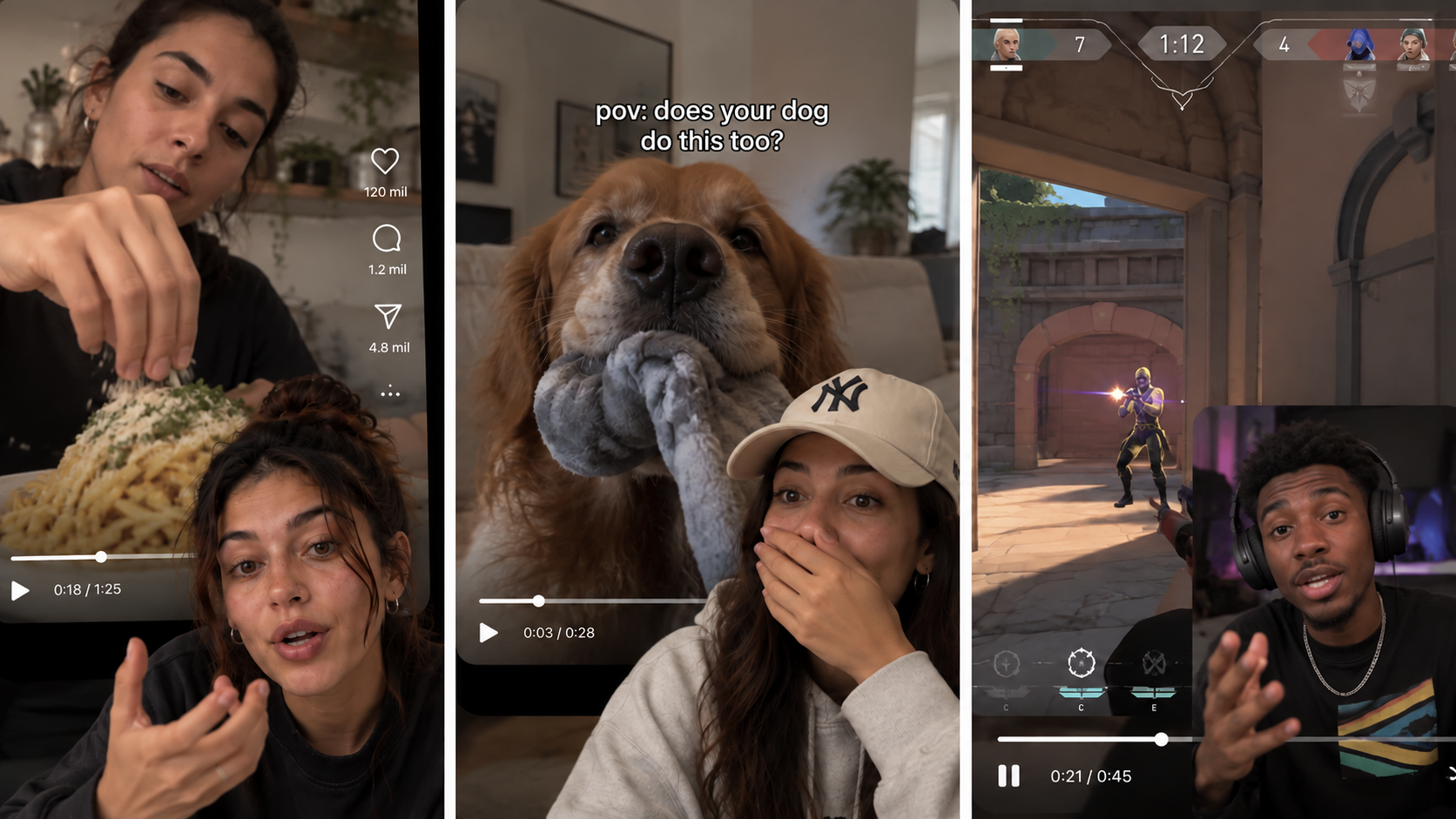
At first glance, a reaction video seems like a solo effort, but it draws on other people’s creations, such as memes and things they’ve said. Reacting is creating, but using other people’s content on your channel calls for care.
Features like duet buttons can give the false impression that any video in your feed is fair game. Every reaction video involves images, audio and other people’s rights.
Before recording, instead of simply asking whether they can react, the Creator should think about the value and fresh context they’re bringing to that material.
A good collab between Creators takes the conversation somewhere new
The difference between a memorable reaction video and a repost in disguise is your perspective. The original video is the starting point, but your take is what brings something new to the table:
- Spot something interesting that others missed.
- Make a compelling counterargument.
- Explain the context behind the topic.
- Analyze the technique or editing.
- Add a touch of humor to the content.
- Connect the story to your own experience.
Here’s something to think about: if your video’s value depends 100% on someone else’s content, it might be worth adding more of your own creative input.
That helps you establish yourself as a genuine Creator, not just someone who copies whatever is going viral.
Publicly available content isn’t free to use
Downloading, remixing and screen recording have become incredibly easy. But being easy to do doesn’t mean you automatically have permission: content being available online doesn’t make it free to use for any purpose.
Image rights vs. copyright
These are two different things. The likeness and voice of anyone appearing in a video fall under image rights. Background music, artwork, photos and even the editing itself involve copyright.
Often, both come into play. That’s why it’s worth paying attention to the people on screen as well as whoever created the visuals and sounds in that post.
Giving credit doesn’t replace permission
Tagging the person who made the video is great and absolutely necessary. But tagging their handle doesn’t give you blanket permission to use the material however you want.
Keep this in mind: credit tells people whose content it is. Permission confirms that you can use it in that way.
There’s no “X-second rule”
You know that claim that “anything under 5 seconds is fine”? It’s a myth. What really matters is the context: does the clip’s length make sense for your commentary? Are you adding something new or just letting the video play?
Using 10 seconds to unpack something someone said is very different from playing 3 minutes of someone else’s video and barely saying a word over it.
The catch with “fair use”
You’ll often hear people say, “It’s fair use, so we’re good.” But fair use is a concept in United States law. Here in Brazil, copyright law has its own specific provisions.
Without getting into tedious legal jargon, the idea is to avoid going on autopilot. You can’t assume everything is allowed just because it’s a reaction video.
When things turn commercial, the rules change
Here’s a key point for anyone who wants to make a living from creating.
Imagine you made an organic reaction video that went viral. A brand loves the result and wants to sponsor the post or use it as an ad. The video hasn’t changed, but its purpose is now commercial.
The same goes for content used in a paid course, a sponsored post or a bigger campaign. If money is on the table, you need to agree on everything again with whoever owns the original material.
At Flamus, we stand by this: taking your channel seriously as a business doesn’t turn creating into red tape. It means seeing your content as an asset that’s valuable to you and your partners.
A quick checklist before you publish
Do I know who created the content? Check who produced it, not just who appears in it.
Am I only using the part I need? The original video helps provide context, but it shouldn’t take up the whole post.
Am I bringing something new? Whether it’s an opinion, a technical analysis or a joke.
Does it include other people’s music or photos? Watch out for copyrighted artwork and tracks.
Have I given proper credit? Supporting the people who inspire you is part of being a community.
Will there be monetization or a sponsored post? If money is involved, review the permissions.
Does the clip respect the original meaning? Be careful not to deliberately take things out of context.
Reaction videos are about connection, not shortcuts
The internet is amazing because one idea leads to another. A video gets a response, a meme gets a new version and the conversation spreads.
That’s what makes reaction videos work so well. The difference is joining that exchange thoughtfully, without treating the feed as if nothing belongs to anyone.
Creating professionally doesn’t take away your spontaneity. It simply means valuing whoever started the conversation and building your career on a solid foundation.
At Flamus, we believe in the power of collaboration. Connect with other Creators, exchange ideas and create collaborative content that sparks great conversations.