You buy a new microphone, press REC and… the echo is still there. Your hand touches the table, and the thud ends up in the recording. You spent the money, but you’re still hearing the same problem.
Choosing a podcast microphone gets easier when you know where you’ll record and how many people need to be heard. Alexandre Nickel, a podcaster and producer with more than eight years of experience in the field, shared the models in this guide. Here’s when each choice makes sense.
Before choosing a podcast microphone, consider your space and format
Start with the space where you’ll record. Bare walls encourage echo, while curtains and furniture can help. Then think about how many people will take part, the distance between your mouth and the microphone, and how much you can spend.
USB is the most direct way to connect a microphone to your computer. XLR usually calls for another device in between: an audio interface, a recorder or a mixer. Choosing between dynamic and condenser microphones is about how they pick up sound. Dynamic microphones tend to work well when your voice is close; condenser microphones can capture more detail from the room. Moved the microphone? Listen again. The room’s acoustics are still part of the recording.
Which podcast microphone should you choose? Explore Alexandre Nickel’s recommendations
USB and hybrid microphones for solo recording
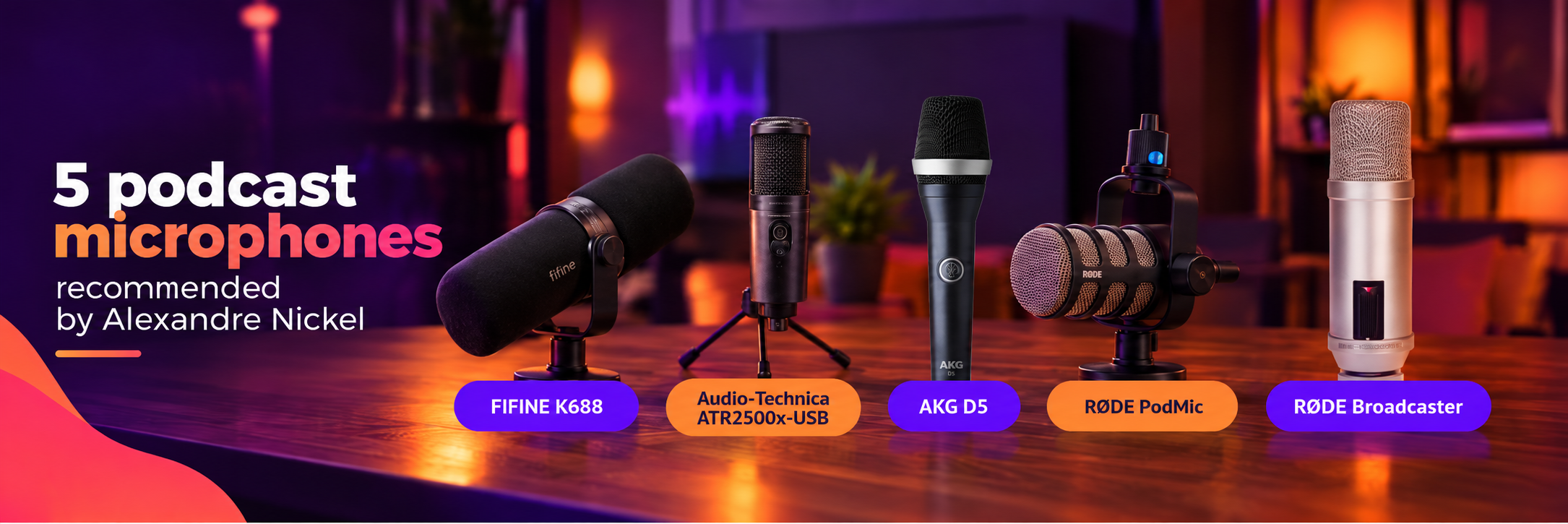
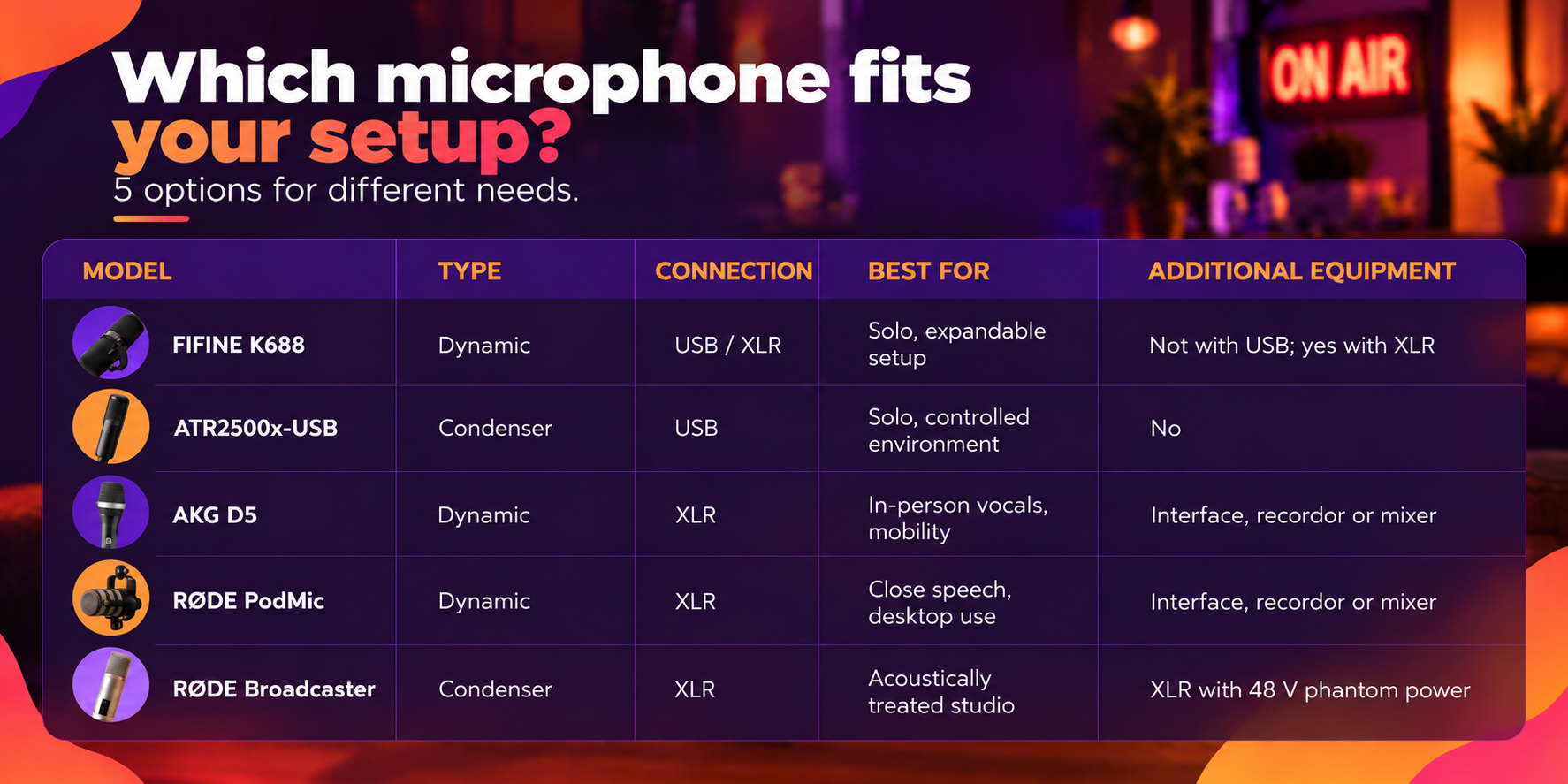
The FIFINE K688 is a dynamic microphone with USB and XLR connections. You can start with USB and use XLR if you want to expand your setup later. The Audio-Technica ATR2500x-USB is a USB condenser microphone with a headphone output, so you can hear how the recording sounds.
Professional podcast microphones: options with XLR connections
The AKG D5 is a handheld dynamic microphone that can be used in different positions. The RØDE PodMic is a dynamic microphone for speech, with a built-in pop filter. The RØDE Broadcaster is a broadcast condenser microphone and calls for a more controlled environment. Before investing in a professional podcast microphone, check what each model needs to work with the equipment you already have.
Comparing the five models
Mixer, audio interface or recorder: what does your podcast really need?
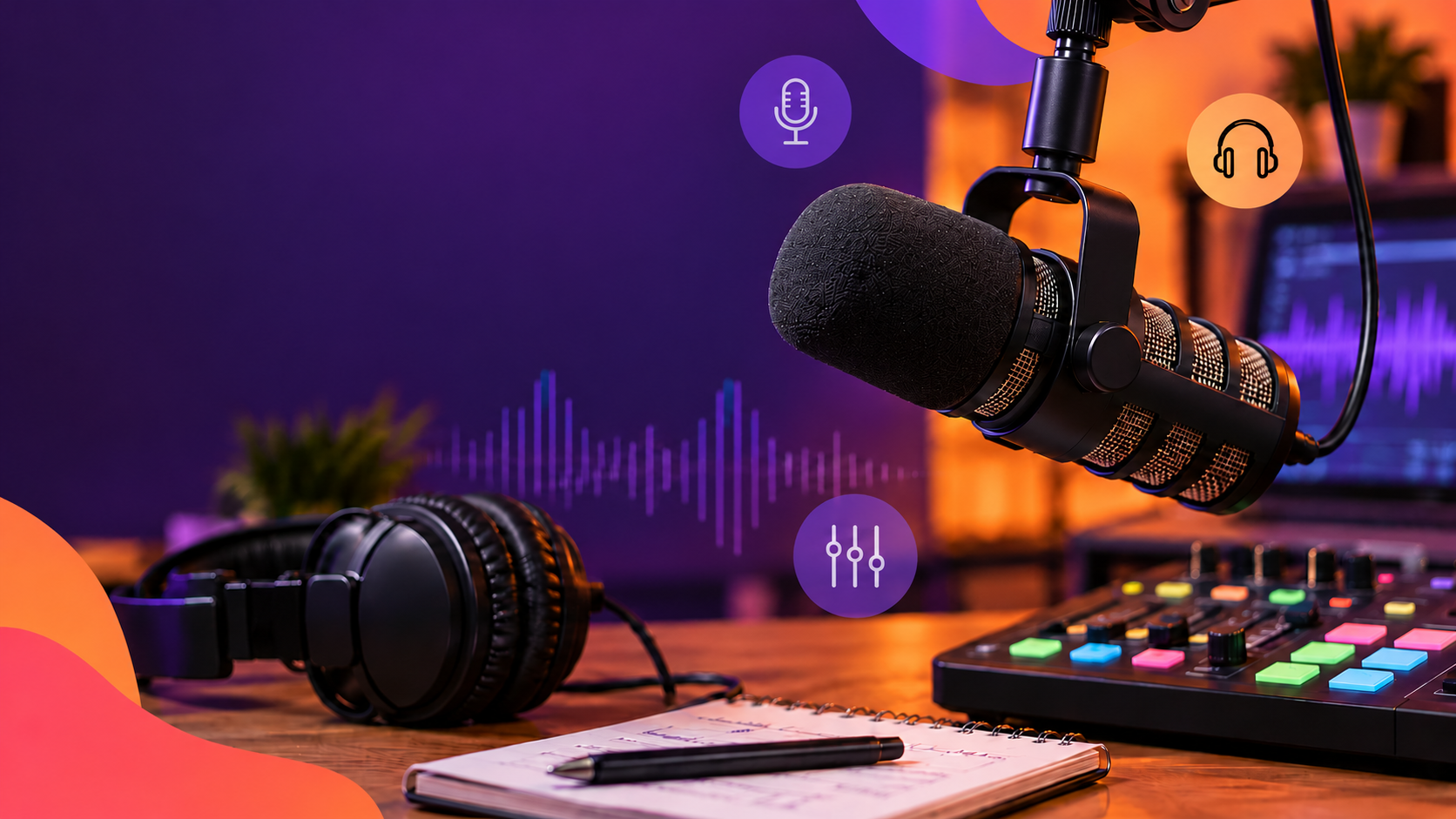
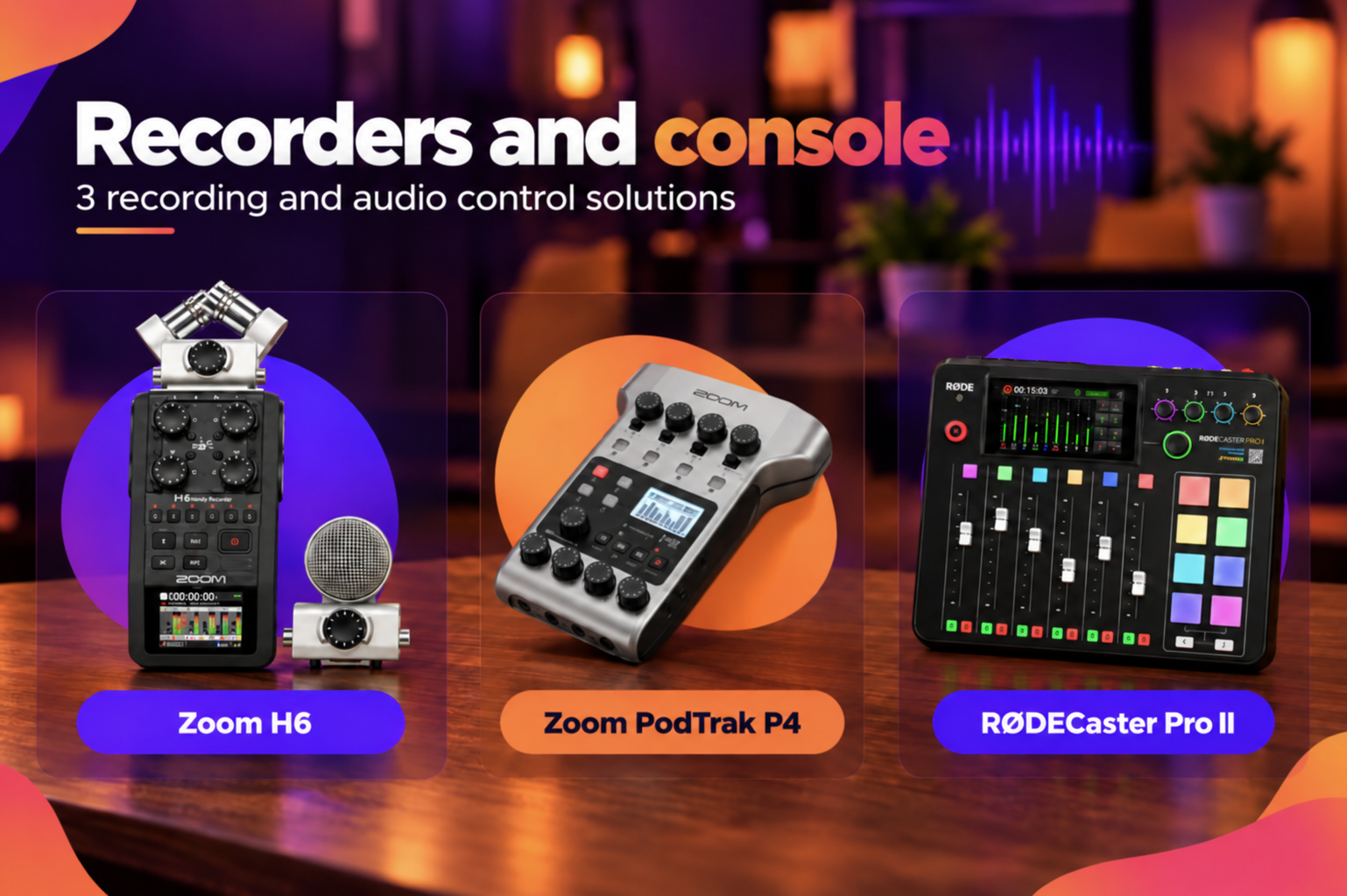
An audio interface connects an XLR microphone to your computer. A recorder lets you record audio without relying on a computer. A mixer helps you adjust audio from different microphones and other sources. Some devices do more than one of these jobs.
The Zoom H6 gives you the freedom to record outside the studio. The Zoom PodTrak P4 offers four independent headphone outputs, useful for in-person conversations. The RØDECaster Pro II combines recording and mixing in a more comprehensive production station.
If you record alone with USB, you may be able to skip the mixer. For an in-person conversation with three guests, having an input and headphones for each person makes a difference.
Desktop podcast microphones: stands, cables and accessories matter too
Desk stand or boom arm?
A desk stand takes up little space, but it can transmit knocks on the table to the microphone. A boom arm makes it easier to bring the microphone closer to your mouth and reduce that contact, as long as it’s secure. Even a good desktop podcast microphone can produce poor audio if it’s badly positioned.
Cables, headphones and audio monitoring
Before recording, check that your cables and inputs are compatible, and use headphones to monitor the audio. If your voice distorts or a cable fails, you’ll notice right away and still have time to fix it.
For solo recording, USB and headphones may be enough. With several voices, independent inputs make a difference. For regular productions, a console can simplify the workflow. If you still don’t know what a device will solve in your recording, it’s worth doing more testing before buying.
Before you buy, press play on your test recording
Make a short recording and listen carefully. If your voice got lost in the echo or every tap on the table drew more attention than the conversation, take a step back and adjust. On Flamus, you can share exclusive content with your podcast listeners. Explore the platform. And before your next purchase, listen one more time.