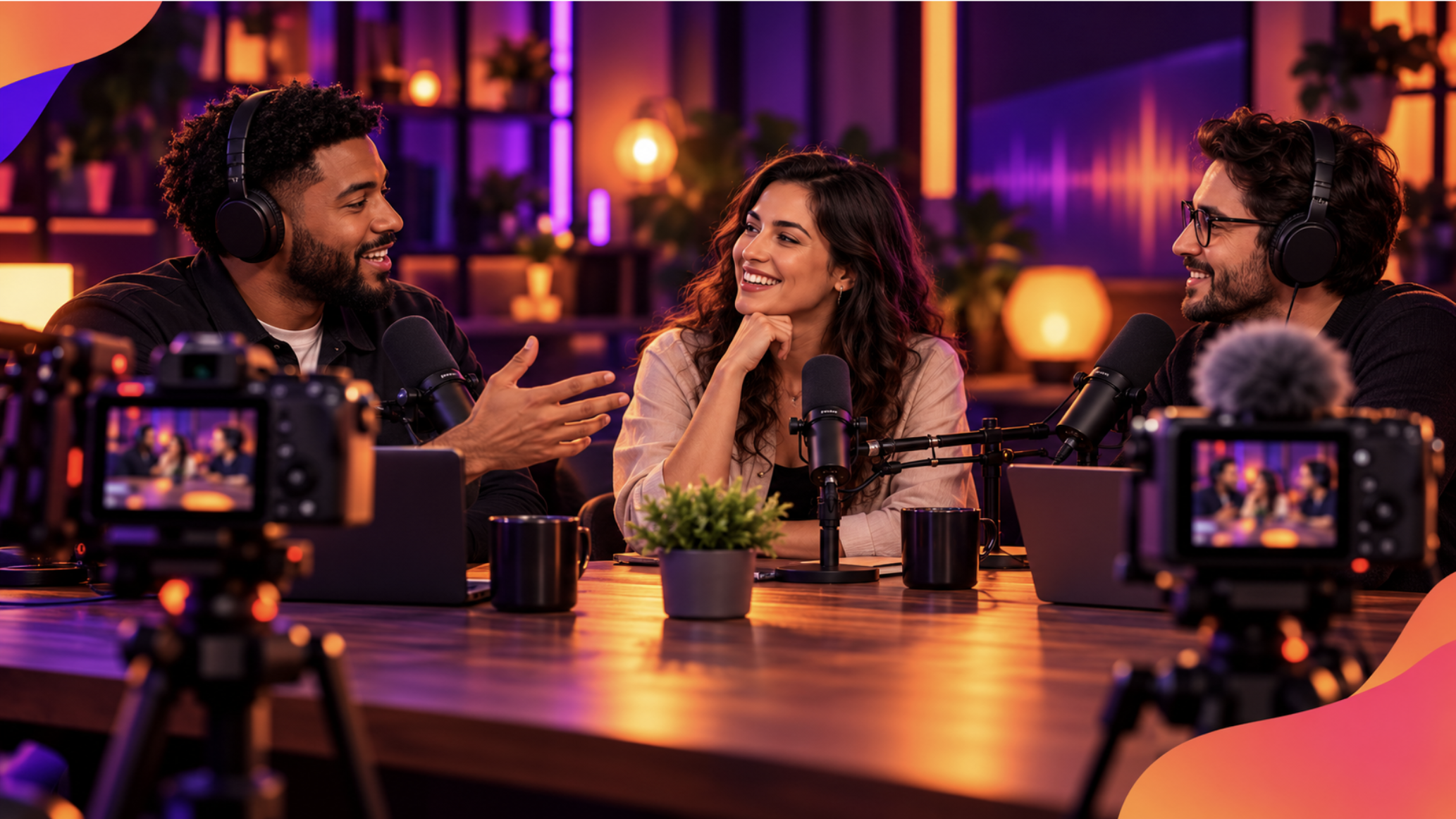
The guest tells a wild story. The host holds back a laugh, and someone beside them goes wide-eyed. The story works in audio. But it’s on video that it comes to life.
But which podcast camera makes sense for what you want to record? Alexandre Nickel, a podcaster, producer and partner at an agency that has specialized in the field for more than eight years, shared a selection of videocast equipment with Flamus.
Podcast or videocast: what changes when you decide to use video?
Someone listening to a podcast on the bus needs to understand the conversation without looking at a screen. In a videocast, gestures, glances and the setting can add information. And an episode can be released in both formats, with suitable edits.
In a 2019 interview on the Sistema Solari podcast, Nickel highlighted video as an opportunity to create a recognizable visual identity. That also means putting thought into the set, lighting, framing and editing.
Cameras for recording podcasts: from phones to professional equipment
Your first camera could be the phone you already have. With good lighting and framing, it can work better than an expensive camera you don’t yet know how to use. Just test it through an entire conversation to see whether it can handle a full episode. Move to a dedicated camera when you have more experience and the budget for it.
So which cameras does Alexandre Nickel recommend?
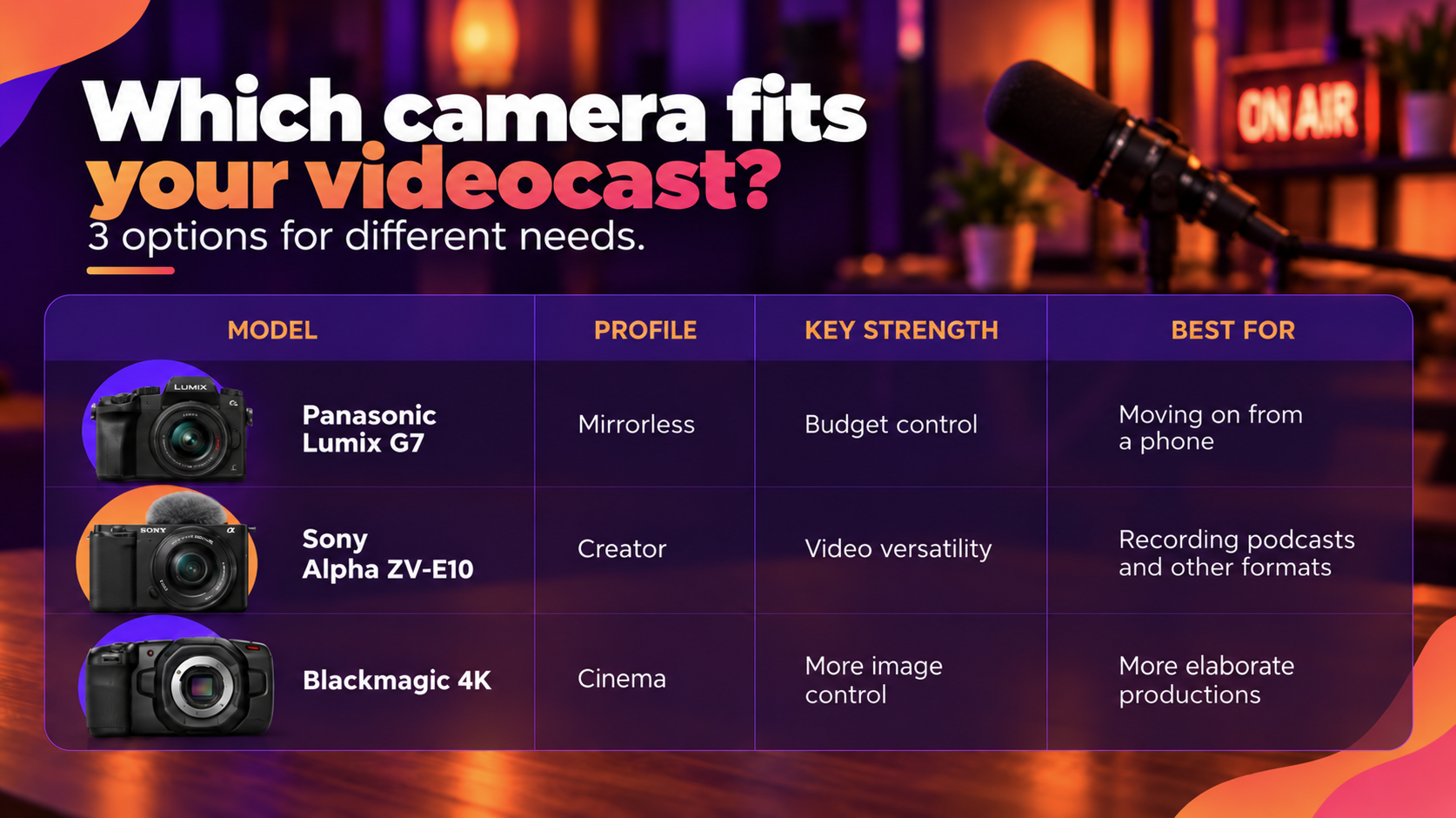
The selection of podcast cameras Nickel shared with Flamus includes three options for different needs:
Panasonic Lumix G7: a dedicated camera option for those watching their budget, including on the used market. Check its condition, accessories and recording limits.
Sony Alpha ZV-E10: an option to consider for a Creator who records videocasts and other formats. Assess its focus, lenses and operation during long recording sessions.
Blackmagic 4K: a benchmark for productions with greater image control and a crew ready to operate it.
If you’re comparing a mirrorless camera with a camcorder for podcasting, test how each performs through a full recording. In the middle of a good conversation, the last thing you want is to stop everything to figure out why the camera turned off.
Lenses and lighting: what makes a difference to your videocast’s image?
Sometimes you want to show the whole table. Other times, you want a closer look at the speaker’s expression. The lens helps you choose that framing. And the lighting needs to make faces visible without stealing attention from the conversation. It’s important to choose a lens with the right combination of focal length (which determines how much of the scene fits in the frame) and aperture (which affects how much light gets in). Nickel, for example, uses a Lumix G 12-35 mm f/2.8 lens at his agency, but you should understand whether it suits what you want to achieve before buying.
Videocast lighting: how do you build a practical setup?
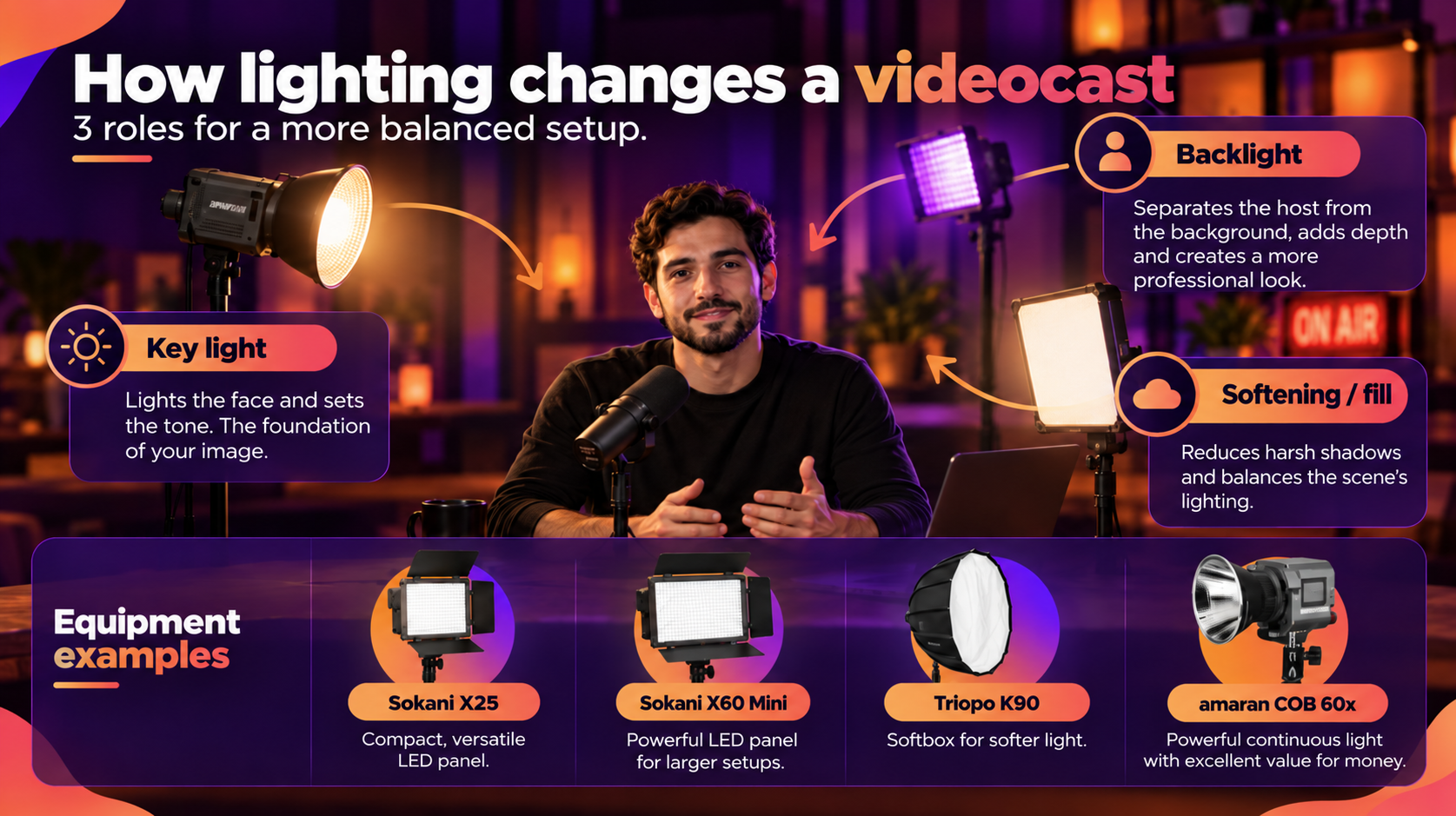
The key light highlights the speaker. A diffuser or softbox softens shadows; the backlight separates the person from the background. Nickel’s lighting recommendations include Sokani X25, Sokani X60 Mini, Triopo K90 and amaran COB 60x, along with modifiers and stands. Adjust the lights while looking at the camera image. If the set draws more attention than the person speaking, try a different position or intensity.
How do you record a videocast with more than one camera?
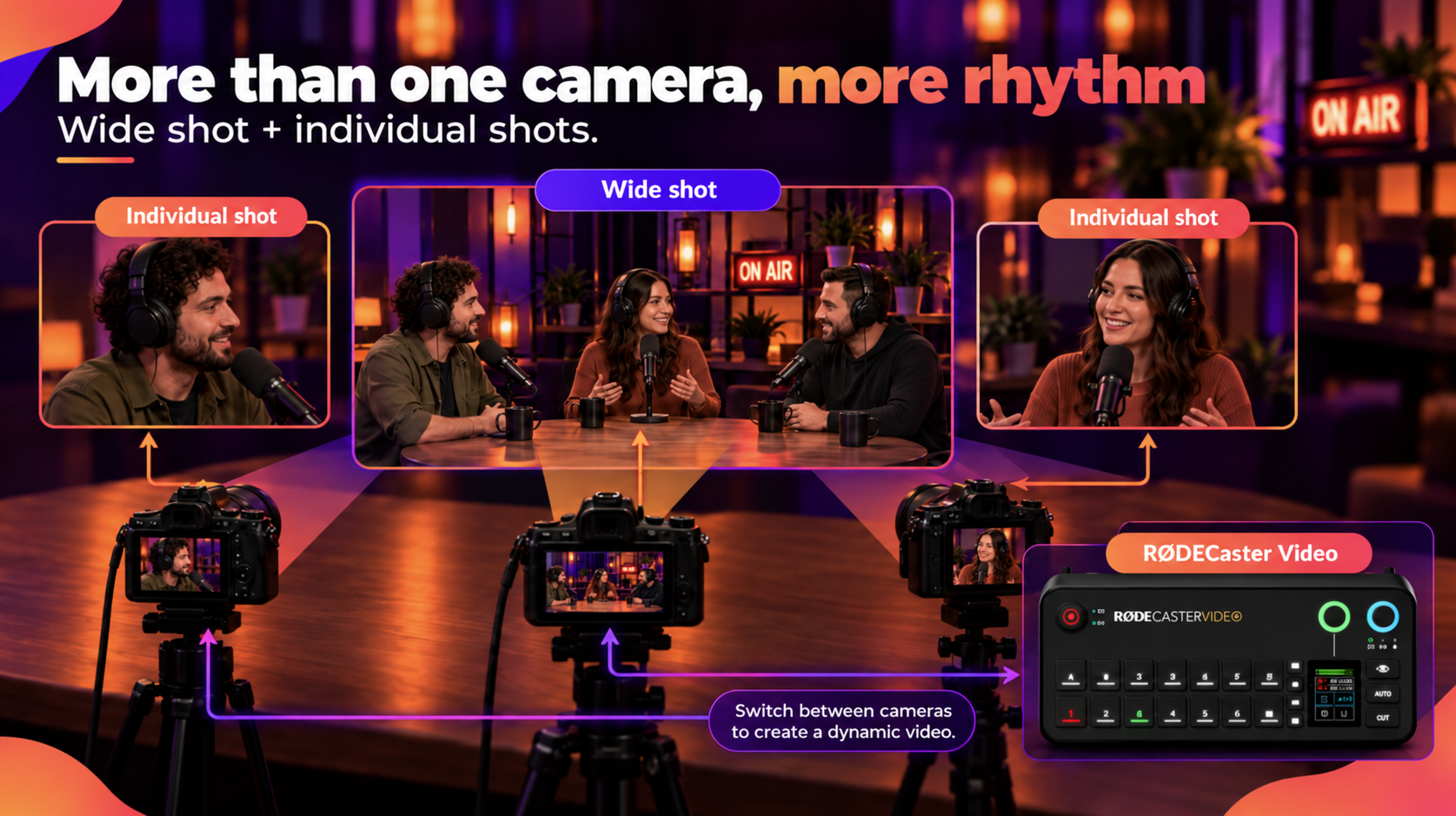
In an interview, the wide shot shows the whole table. Individual shots bring viewers closer to the speaker and to the reactions of those listening. Switching between them gives the conversation rhythm, but it also means more files to organize. And someone needs to handle audio synchronization and make sure every camera has power.
You can switch cameras live or choose your shots in the edit. The RØDECaster Video, recommended by Nickel, is a console that lets you combine and switch between video sources in real time. Consider how many inputs and operators you’ll need.
If you’re looking for a camera for recording podcasts, you probably care a lot about equipment, and you’re right to. The thing is, surprising as it may seem, the equipment isn’t what matters most in a podcast or videocast. What matters most is what it says and where it lives.
I know that’s hard to believe, but it’s true. That doesn’t mean you should forget about equipment and work with just anything. Quite the opposite. At Flamus, you’ll find plenty of content and support from professionals like Alexandre Nickel to help you understand how to start a podcast from scratch, choose the best equipment and distribute it. You can also use our platform to build a community and share behind-the-scenes content and exclusives with people who want to follow your work more closely.