For people whose work is built around their own image, the feeling of being available can linger long after the workday ends.

André Biage, a therapist, psychoanalyst and mental health Creator, sums up a point that can help us look at the issue before it becomes a crisis: “Mental health is everyday life. Mental health is routine. Mental health is there all the time.”
If care is part of daily life, the way you expose yourself online is part of that equation too. Digital overexposure starts to take a toll when sharing stops being a choice and starts to feel like an obligation.
What Is Digital Overexposure?
Digital overexposure is not the same as posting a lot. What matters is how much of your personal life becomes accessible: your routine, location, relationships, opinions and intimate moments.
For Creators, the line is delicate because being online is also part of the job. The risk appears when everything feels like it needs to become content and almost nothing remains yours alone.
What Are the Signs of Digital Overexposure?
Pressure can arrive disguised as part of your professional routine: replying quickly, explaining absences, posting when you have no energy and monitoring comments all the time. André talks about identifying the daily “stressors,” including those that cannot be eliminated:
- Feeling like you need to be available all the time, replying, posting or justifying any pause.
- Realizing that almost everything in your life has become content, including your routine, relationships, location or intimate moments.
- Starting to make decisions based first on the audience’s reaction, with the constant feeling of being watched, judged or pressured.
In digital life, recognizing these stressors helps you create workable boundaries, such as notification-free hours, breaks without an announcement and experiences shared only after you have lived them.
The Internet Court and the Feeling of Always Being Watched
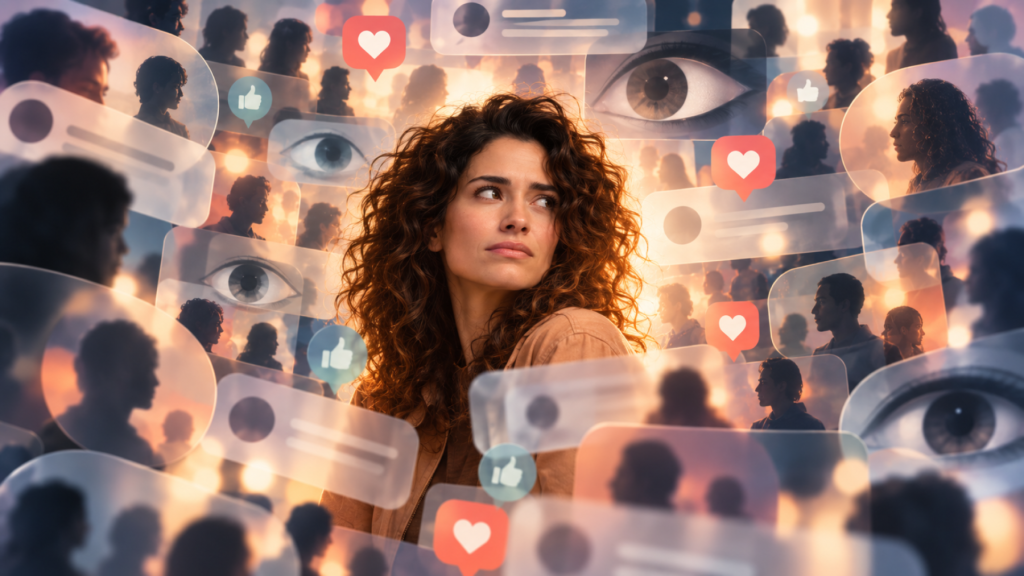
The more your digital exposure includes personal aspects, the more people feel entitled to judge them. A relationship becomes a topic, a change in appearance calls for an explanation and even an old opinion resurfaces out of context.
Living in front of an audience can turn ordinary decisions into an obligation to explain yourself. To protect your mental health and avoid overexposure, remember that a public presence does not create an obligation to provide total access.
Not Everything Needs to Become Content
There is no universal rule for defining privacy. A useful boundary is one that lets you keep creating without turning your own life into raw material all the time. We have put together a few tips to help you start thinking about how to better separate what is public from what is private.
Routine and Real-Time Location
Posting a place after leaving it and avoiding showing every step in real time protects your safety and gives you space to live before narrating.
Relationships, Family and the People Close to You
The people close to you did not necessarily choose a public life. Agreeing on what can appear helps protect your relationships. This is especially important for children, who are not yet old enough to rationally decide whether they want to be exposed.
Vulnerable Moments and Personal Matters
Vulnerability can create connection, but timing matters. You can process an experience before turning a difficult moment into a post.
The Right to Change Your Mind and Not Explain Everything
Changing your opinion, closing a subject or not responding are also part of having boundaries. Your audience follows what you share; it does not automatically have access to the rest.
Keeping a Low Profile Can Also Be a Way to Set Boundaries
Being low profile does not have to be an aesthetic or a mystery. It can be a choice about frequency, privacy and availability.
For Creators, showing up less at times does not mean abandoning the community. It may be what allows you to stay present without living in public mode all the time.
You Do Not Need to Wait for a Crisis to Start Taking Care of Yourself
André points out that the absence of visible symptoms does not mean everything is fine. Noticing early what weighs on your routine helps you seek support before a crisis.
He also emphasizes that asking for help should not come with shame. Therapy, psychiatric care when indicated and the public healthcare network exist to provide care.
André has spoken about psychoanalysis, self-awareness and content creation at Flamus.
Building a sustainable career also means noticing when your digital presence is demanding more than it should. Staying close to the community does not require turning every part of your life into content.
At Flamus, Creators can build closeness around what they choose to share, with the freedom to decide what goes into the feed and what remains theirs alone. Create at your own pace, without confusing presence with permanent availability.
Care note: If you are experiencing intense distress, seek a healthcare professional or service. Through SUS, visit a UBS or CAPS. The Centro de Valorização da Vida (CVV) provides free support by phone at 188, 24 hours a day.