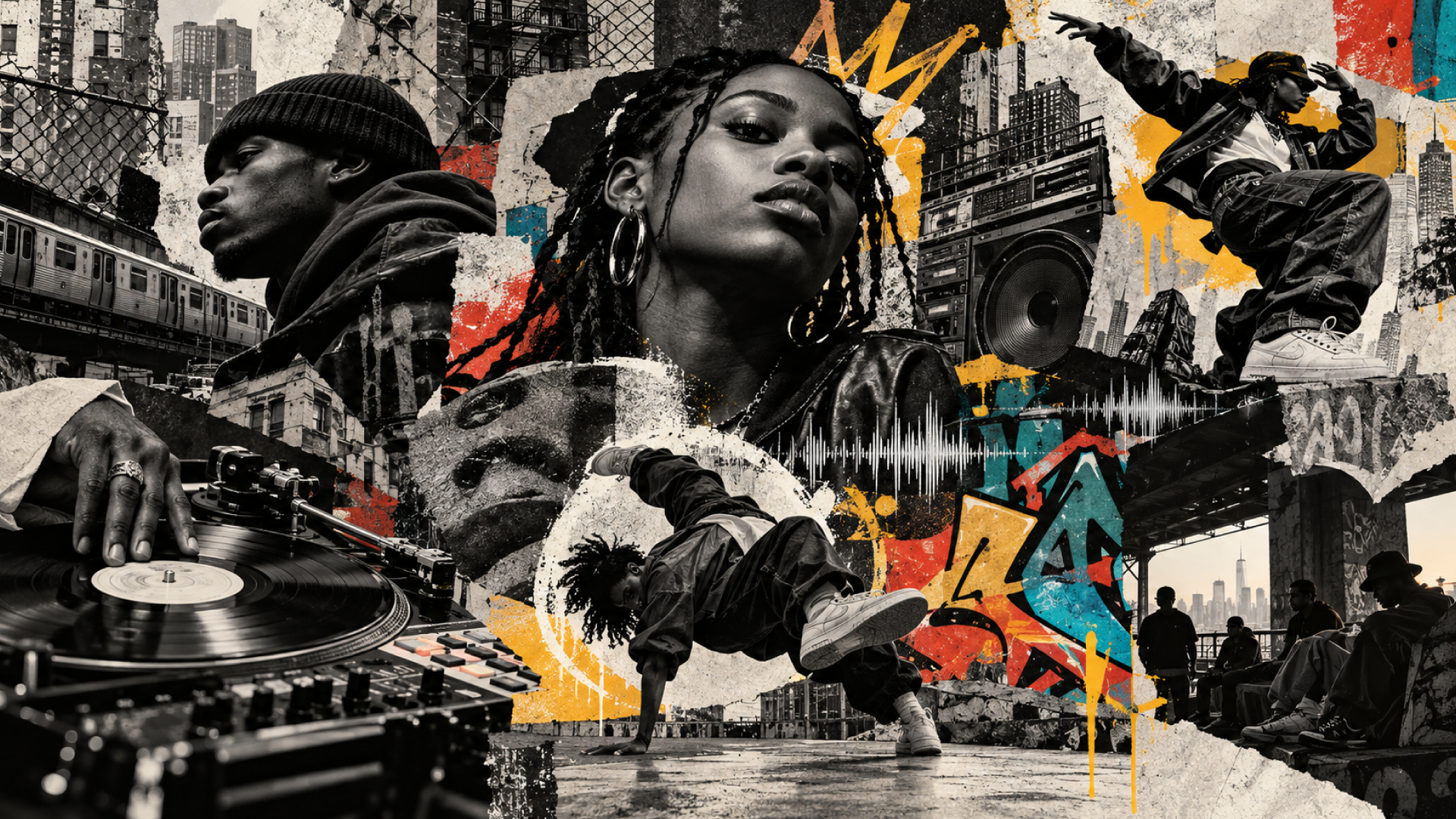
You might discover hip hop through a song, a pair of sneakers, a breaking move, or a mural on your way home. The story rarely ends there.
Hip hop culture grew out of that mix. Music, dance, graffiti, fashion, and community created a shared vocabulary that now appears in music videos, feeds, and trends too.
For Creators, understanding those codes makes a difference. A reference might inspire a striking visual style. With context, it can also become analysis, curation, storytelling, and a conversation with the community.
Before borrowing a look, a beat, or a trend, it is worth learning the history behind it.
Hip hop is more than music: it brings many forms together
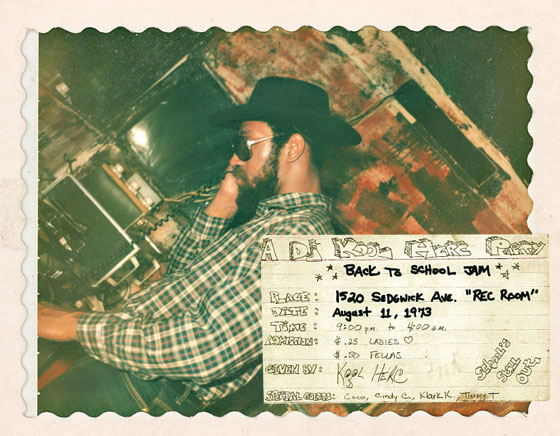
A party in the Bronx became one of the best-known milestones in that history. On August 11, 1973, Cindy Campbell organized a gathering at 1520 Sedgwick Avenue, with her brother DJ Kool Herc on the turntables.
But no culture emerges overnight.
Hip hop developed among predominantly Black and Latino communities in the Bronx, shaped by urban inequality and Caribbean cultural influences.
Hip hop is also resistance
More than a new aesthetic, hip hop became a cultural, social, and political movement. In historically marginalized communities, it offered ways to claim space, build identity, call out inequality, and tell their own stories.
That is why understanding hip hop takes more than recognizing a sneaker. It means learning who created these codes, the circumstances in which they emerged, what they communicated, and how they made their way into the content we see today.
Music, dance, graffiti, and fashion are not just visual or sonic references. They are forms of expression shaped by belonging, memory, resistance, and social change.
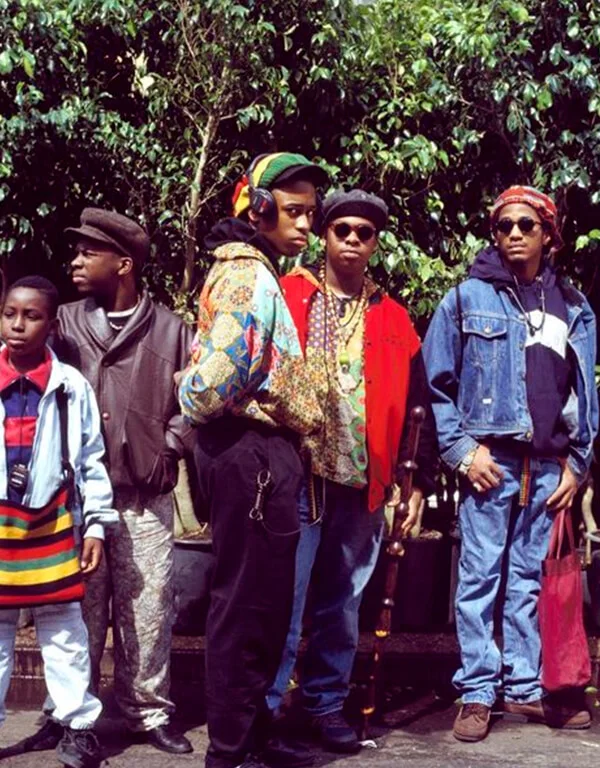
What makes up hip hop culture?
Music
Rap is hip hop, but hip hop is not just rap. DJs worked with records and extended breaks, while MCs turned voice, rhythm, and lived experience into stories.
Samples are part of that approach too: existing fragments take on new meanings when they are rearranged.
Among the most recognizable elements of hip hop culture are DJing, MCing and rap, breaking, and graffiti. Fashion, language, and community life also keep these codes moving and connect them to different eras and places.
Dance
Breaking turns the body into a form of expression. Technique, rhythm, and improvisation come together in battles and cyphers, where dance is also competition, celebration, and exchange.
Graffiti: identity and claiming visual space
Hip hop art also claimed the walls. Graffiti uses color, signatures, and style to assert a presence and carry messages.
LOAD Comics shows how these codes continue to come together online. In Rap em Quadrinhos, a project created with Wagner Loud, stories from rap meet the language of superheroes.
Hip hop fashion: codes that change over time
Hip hop fashion has never depended on a fixed list of pieces. Its codes change with the era, the place, and the community.
Tasha & Tracie show how that identity takes shape. Before establishing themselves as MCs, they created the blog Expensive $hit, featuring fashion, music, and beauty editorials.
Their path offers an important lesson for Creators: identity also takes shape as you publish, experiment, and connect references.
Community
Parties, battles, crews, and collectives are part of how hip hop shares knowledge and preserves stories.
In Brazil, the movement gained momentum in the 1980s, especially among Black youth from communities on the margins of the city. Places such as São Bento and 24 de Maio became important meeting points in the São Paulo scene.
How to turn hip hop culture into content
A Creator could put together looks inspired by different eras and explain where a piece came from. They could analyze music videos, samples, and albums, or explore a dance move or sound that has resurfaced in a trend.
Brandon Shaw of Digging The Greats does this when he explains musical influences and references in a series of videos about hip hop. His content does not stop at the aesthetic: it helps audiences understand where those codes came from.
Authenticity in hip hop takes knowledge of its roots
Saving a look on Pinterest is easy. Understanding why that outfit, hairstyle, or symbol exists takes more curiosity.
In hip hop, aesthetics carry history. When a Creator researches origins, acknowledges influences, and adds their own perspective, a reference can become curation, analysis, or storytelling.
Authenticity does not mean inventing everything from scratch. It means knowing where you are starting and what you are adding.
Hip hop culture continues to influence content creation
Hip hop has crossed decades because its forms of expression keep meeting. The beat meets the dance. Graffiti meets the city. Clothing becomes a code. And the community keeps those references in motion.
For content Creators, that cultural knowledge helps them build a voice people recognize and a conversation people want to keep joining.
On Flamus, Creators can take that exchange beyond a post, sharing references, creative processes, analyses, and exclusive content with a community that understands those codes too.
Come ignite your flame with us 🔥